As announced last week, plants in two fields in Benton County, Washington tested positive for Blueberry scorch virus (BlScV). Although this virus is widespread in coastal BC and northwest Washington, it has not been reported east of the Cascades until now

For additional management reference, click here.

Authors

  • BlScV is transmitted by aphids and in infected planting stock
  • Season-long aphid management is essential to managing BlScV
  • Test fields regularly to identify BlScV
  • Remove plants that test positive and monitor fields for several years.

As announced last week, plants in two fields in Benton County, Washington tested positive for Blueberry scorch virus (BlScV). Although this virus is widespread in coastal BC and northwest Washington, it has not been reported east of the Cascades until now. The source and extent of infection, how the virus is moving, and the broader implications for the region are still being investigated. The virus is lethal to plants of all known highbush blueberry varieties, although there is wide variation in how long plants will tolerate the virus before they succumb. This note is to help growers develop management plans for BlScV.

BlScV can spread by infected planting stock and via aphids. To ensure you have clean planting stock, choose clean stock from a certified nursery, and ask the nursery if the plants have been tested. Washington State’s Blueberry Scorch Quarentine restricts the import of blueberry plants into the state; be sure your nursery has met the quarentine requirements, and do not hesitate to ask them what else they do to keep their plants free from BlScV.

image is not available

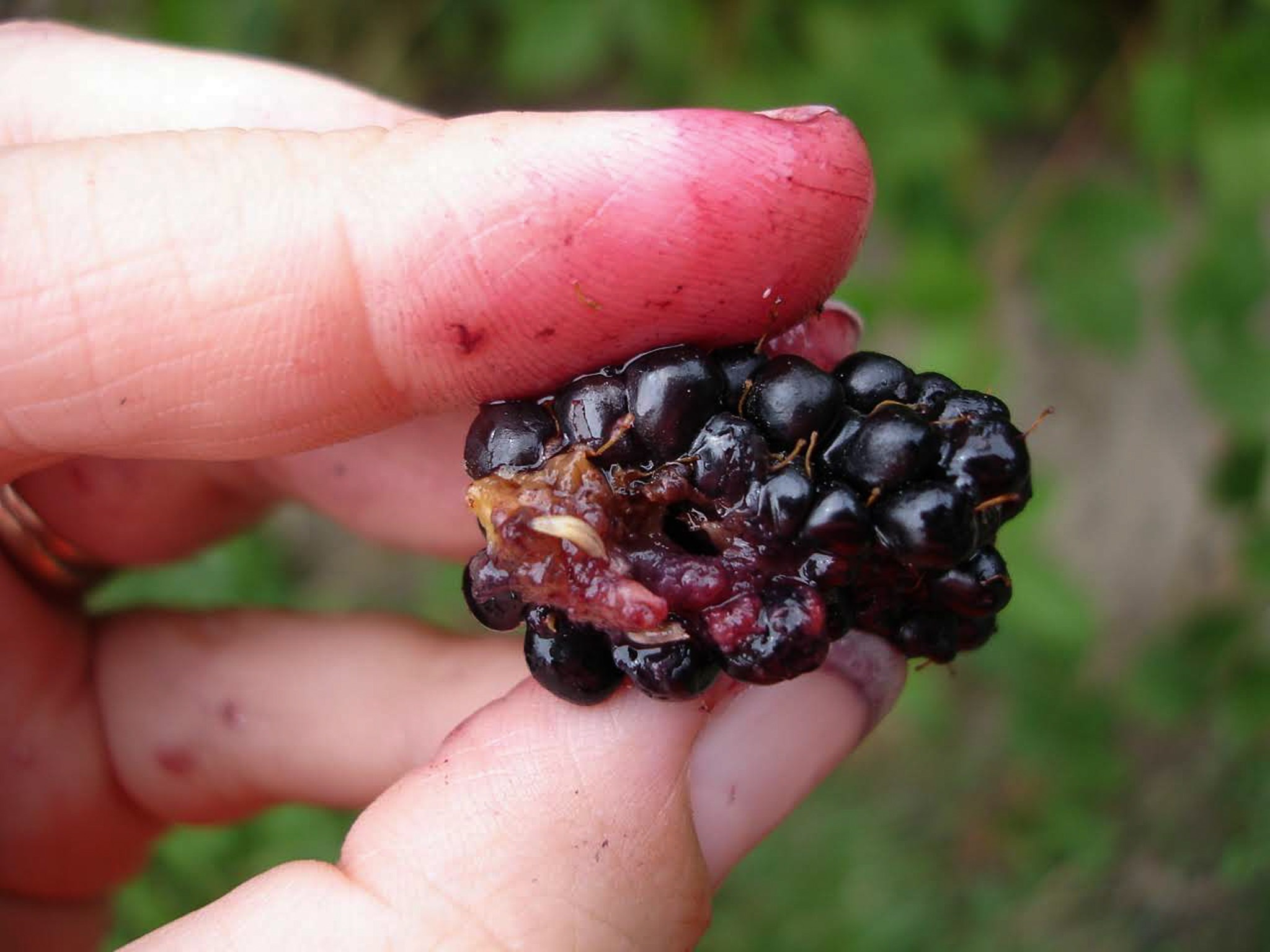
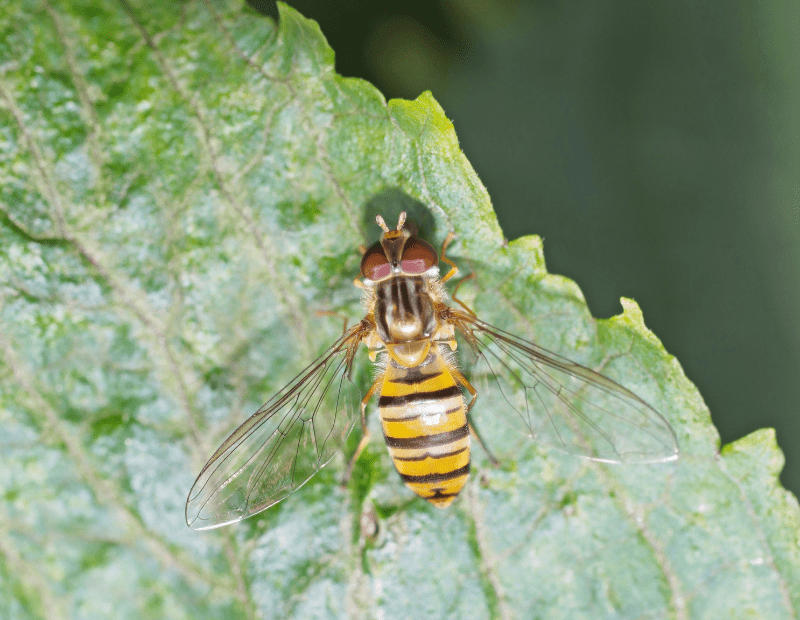
It is thought that the main aphid species vectoring viruses in blueberries on the West side are probably Ericaphis and Illinoia; on the East side is most likely the green peach aphid, Myzus persicae. Because of the uncertainty about which species can vector BlScV, do not tolerate any aphids on blueberries regardless of the species.

If BlScV is present in your fields, or in your production area, managing aphids season long is critical to reducing the spread of Scorch and prolonging the life of your plantings. Aphid populations can develop any time from April-September.

Scout fields for aphids regularly, at least every week or two. Choose several scouting sites scattered around the field. At each site, you can simply turn over 20 or more leaves and look for aphids on the undersides. Alternatively, at each site you can beat shoot terminals on to a clipboard with a white piece of paper.

Begin scouting for aphids once leaves emerge, and continue to scout every week (or two?) for the entire season. Act whenever aphids are found. Do not wait for populations to build to an economic threshold. The concern here is aphids spreading virus, not the direct damage they cause to plants.

Scout and protect newly planted fields, even though they are not producing.

There are many, many aphid management options registered on blueberry in Washington state. This list includes 134 aphidicide products. Most of these are for conventional use only, although there are some OMRI-approved options as well.

This list includes 134 aphidicide products. Most of these are for conventional use only, although there are some OMRI-approved options as well. Work closely with your crop advisors to develop a season-long aphid management program, and always follow the label. Safe and effective aphid management options vary depending upon time of year:

Prebloom scouting and control are essential to keeping aphid populations down through bloom, when control options are limited. Many products have pollinator precautions on the label which preclude application during bloom or several days before beehives are placed. Soil-applied Platinum (Syngenta) can be a very effective very early season treatment, but it must be applied well before bloom begins, and has a 75 day Preharvest Interval.

Options are sharply restricted during bloom. However, Sivanto Prime (Bayer) is labeled for use on blueberry, and can be applied during bloom, except that it cannot be applied to foliage during foraging by alfalfa leafcutter bees used for pollination services. It may not be tank mixed with azole fungicides during bloom. It has been an effective blueberry aphicide in our trials.

Organic products that can be applied during bloom include CinnAcar, Cinnerate, Neem, and azadiractin. Use the higher labeled rate, and apply every 7 days until aphids are gone.

Once bloom is over and bees have been moved out of the field, there are many more insecticide options. Some of the most effective options include: Sivanto Prime, Transform, Actara, and Admire Pro.

Do not assume that your SWD program will or won’t help with aphid management during harvest – it depends on what you use. The most common class of insecticides used for SWD control are pyrethroids, which can cause aphid population booms. Malathion, another commonly used SWD product, has no activity of consequence against aphids.
Virus testing remains the most effective tool for identifying and containing BlScV. This spring, the Washington Blueberry Commission is offering free testing for both BlScV and Blueberry Shock Virus (BlShV), with up to 30 samples available at no cost to each farm paying assessments. Growers can also pay to have additional samples. Testing is conducted by Phyto Diagnostics, a lab with extensive experience serving growers in British Columbia. Lab results are confidential and shared only with the grower.

ELISA tests are used by the Washington program, and by similar programs in BC and Oregon. The ELISA test is inexpensive (a little over $5 per sample, when many samples are run at the same time). It detects known BlScV strains as well as the closely related Blueberry Virus S. However, it is not a very sensitive test by current standards, and our initial testing indicates that many samples contain BlScV, but not at levels sufficient for a positive ELISA result. Accordingly, collect as many samples from symptomatic plants as you can. Remember, you get 30 free samples and additional ones are just over five dollars a piece.

The limited sensitivity of ELISA should also affect how you interpret your results: A positive result is a clear indicator of a larger problem in the field, and you can assume there are more plants with the virus than the test indicates. A negative result as “this part of the plant did not have a high level of this virus today”. Continue to monitor symptomatic plants that test negative. More sensitive, but more expensive, PCR tests for BlScV are also available through Phyto Diagnostics and others.

image is not available

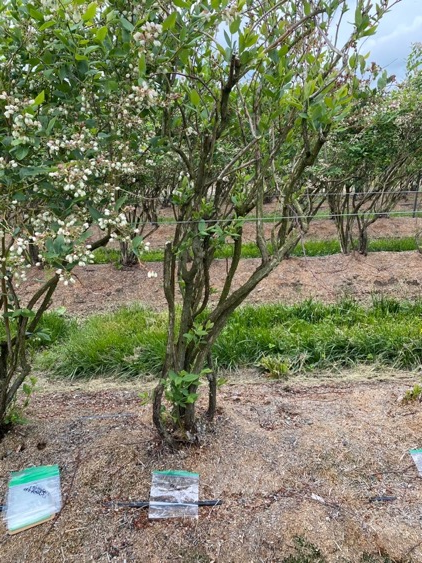
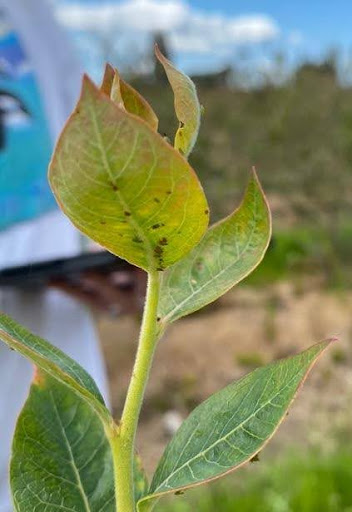
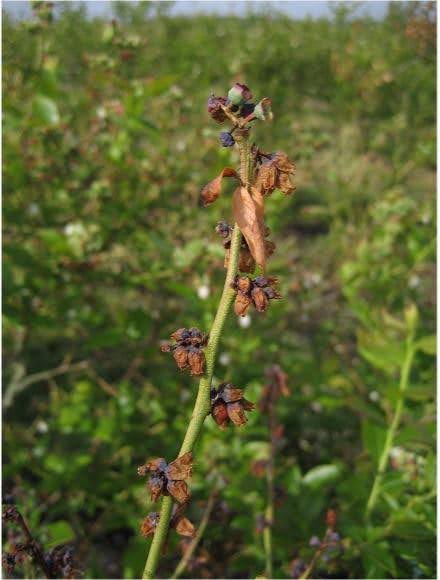
Begin collecting samples as soon as symptoms appear, which is often mid-bloom (photo to left). Symptoms are usually very similar to those of Blueberry Shock Virus (BlShV). Follow these tips for sample collection:

  • Collect from plants representative of symptoms in the field. Sample symptomatic plants as well as a few nearby asymptomatic plants
  • For each sample, collect 10 live leaves from around a plant, choosing leaves close to symptoms when possible. Leaves should be dry or sampled leaves should be patted dry with paper towels. Place the leaves in a seal-able plastic bag.
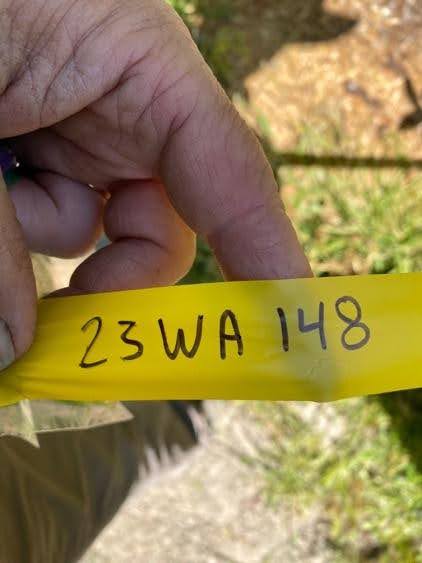
  • Label the plant and the bag, so you can return to the plant once you have results. Use a simple, sequential numbering system for multiple samples. Label each bag with permanent marker on the bottom right corner.
image is not available
Figure . A symptomatic plant (no flowers) with bag, ready for sampling, and sample number written with flagging tape. The same sample number goes on the bag.
image is not available
  • Keep samples dry, but fresh. Keep cool after collection; refrigerate if possible. Do not freeze.
  • Arrange samples in sequential order, in groups of 10-20. Clip or staple the upper left-hand corner.
  • Fill out Phyto Diagnostics’ Sample Submission Form, and include it with your samples. Indicate that payment will be made by the Washington Blueberry Commission, and keep a copy for yourself.


We will arrange for drop off points on both sides of the Cascades, so you do not have to navigate an international shipment. If you prefer to ship yourself, samples can be shipped overnight to Phyto Diagnostics (address: 9381 Ardmore Dr, North Saanich, British Columbia, V8L 5G4, Canada). Pack samples according to the laboratory’s instructions and include two copies of the required Import Permit (the Blueberry Commission will provide this to growers, and additional submission guidance is available from Tom Walters). Samples have no commercial value, and should be described on the customs invoice as “leaf samples for virus testing only. Leaves are destroyed as part of the testing process”. Otherwise, Canadian Customs may apply customs charges to Phyto Diagnostics. The laboratory typically reports results within approximately two weeks of receipt.

Plants that test positive for BlScV should be removed promptly. Nearby plants should also be tested, whether or not they show symptoms. Fields should be monitored closely for at least 3 years.

If you have any questions about the virus testing program, please contact Tom Walters, Walters Ag Research: 360-420-2776, email: waltersagresearch@frontier.com Growers in Benton County can also contact Gwen Hoheisel, WSU Extension Regional Specialist, 509-786-5609, email: ghoheisel@wsu.edu


Get alerts for new topics!

Get alerts for new releases. No spam, just forum topics.

Leave a Reply

Your email address will not be published. Required fields are marked *